

Author: Bill Gilmore
How to Create a Cohesive Social Media Marketing Strategy
Social Media Marketing
Updated for 2026 by Bill Gilmore , Digital Marketing Lead at Nexgen Local Marketing.
Quick answer
A cohesive social strategy keeps voice, visuals, offers, posting cadence, and measurement aligned across every channel.
One voice
This is one of the core pieces that makes social media strategy work as a practical business strategy.
Clear content lanes
This is one of the core pieces that makes social media strategy work as a practical business strategy.
Define The Brand System
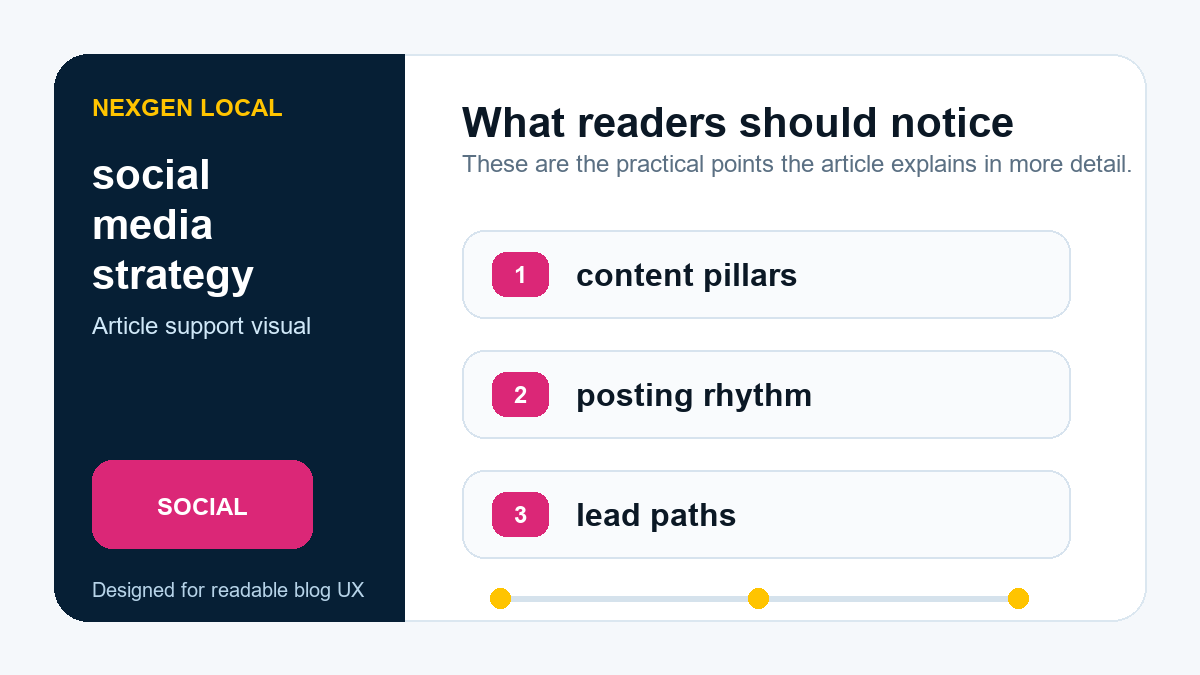
When it comes to social media marketing, a cohesive strategy is key in 2026. It helps consumers recognize your brand by ensuring your voice, style, and tone are consistent across all platforms. To make your social media strategy more effective, continually ask for consumer input. They can provide valuable inspiration and help you stay on-brand as platforms and trends evolve. Creating audience personas The first step in creating a successful persona is to identify your target audience. You can do this by creating a profile of the ideal customer for a particular product or service. Another option is to research your existing audience. This will help you figure out age groups and other demographics that will help you define your target audience.
Knowing who your audience is will help you craft posts in the right way. It will help you establish your social media voice and improve your content strategy. Knowing your audience will allow you to target your advertising to specific segments of your target audience. It will also help you identify the problems they are experiencing and the solutions that you can offer them.
A buyer persona is an ideal customer profile that can help you better target paid and organic social media marketing. The more data sources you use, the more complete your persona will be. It is also helpful to use tools like your customer relationship management (CRM) platform to record your target audience’s needs, challenges, and objections.
Once you have identified your target audience, you can build a persona for them based on their age, interests, demographics, and other traits. A persona will guide your social media voice and help you create useful content that your target audience will find valuable. There are many tools and strategies available to help you create audience personas for social media marketing.
Social media personas are extremely important for your business. Knowing your audience helps you draft content, develop strategies, and convert them into customers. In addition to being effective, a social media persona will help you maintain consistency among your interactions. Identifying the right social media keywords Identifying the right social media keywords for your marketing campaigns is essential to ensure that your audience will see your messages. Using keywords that are appropriate for your audience’s preferences and needs will improve engagement and reach. Before you start creating your campaign, conduct research to identify the right keywords for your niche.
One of the best ways to find social media keywords is to run a basic search across all the major networks. Using a native search on each platform will give you a good idea of which keywords are popular, underexploited, and overused. Keep in mind that users use search functions differently and are likely to look for different things on different platforms like TikTok versus LinkedIn.
Researching keywords for social media is a great way to get an edge on your competitors. Your competitors have likely already researched the keywords they use and analyzed them on a site-by-site basis. However, the way users search for terms on social media sites varies wildly, so your approach to keyword research must change accordingly. Luckily, there are a number of resources and platform-specific tools available to help you learn how to research the right social media keywords for marketing.
Once you have identified the keywords for your social media campaigns, the next step is to optimize your content around those keywords for different platforms. This is not a one-time task and should be an ongoing part of your strategy. Identifying the right social media keywords for your marketing campaigns will help you increase engagement and get the results you need.
Visual platforms like Pinterest and Instagram are excellent tools for identifying social media keywords. Their search features allow you to type in a keyword and get multiple visual and text-based suggestions. The results will include popular phrases and trending topics related to your products. You can also use social listening tools to see which terms are trending across the social landscape. Creating shareable content To create shareable content for your social media marketing strategy, you must create something that your target audience will enjoy. This is especially true for short-form video on platforms like Instagram Reels and YouTube Shorts. Moreover, the content must also contain a clear call to action (CTA) and be valuable to your audience. Examples of shareable content include short videos, user-generated content campaigns, surveys, and quizzes.
The content must be easy to consume and skim. Listicles and “how-to” guides work well because people tend to scan for key information. Make your content as informative and educational as possible, but also make it fun and interesting. This can boost your viral factor. However, ensure your posts are concise and get to the point quickly.
Shareable content is a valuable marketing strategy. It can generate buzz about a new product or service and increase brand awareness. One way to do this is by having a popular influencer or user share a post about a new item. This can be your followers’ first introduction to the brand. The right content can make them want to learn more and share it with their networks.
People are attracted to content that evokes emotion. Emotional content, such as personal stories or behind-the-scenes looks at your business, can inspire people to take action. In addition, it can significantly increase interaction. Think about what articles and videos have captivated you and inspired you to share them. You can also seek the advice of a marketing expert who can help you incorporate shareable content techniques into your social media strategy.
The choice of words is another important factor in creating shareable content. If your content is too complicated to read or understand, chances are your audience won’t share it. Instead, make sure the words you use are easy to understand and use clear, quality language. Creating a social media strategy When creating a social media strategy for marketing, you should have clear goals in mind. These goals should complement your overall business objectives. You should also know your target audience so that you can tailor your social media strategy to them. You can use the personas you created to help you target the right audience with the right message.
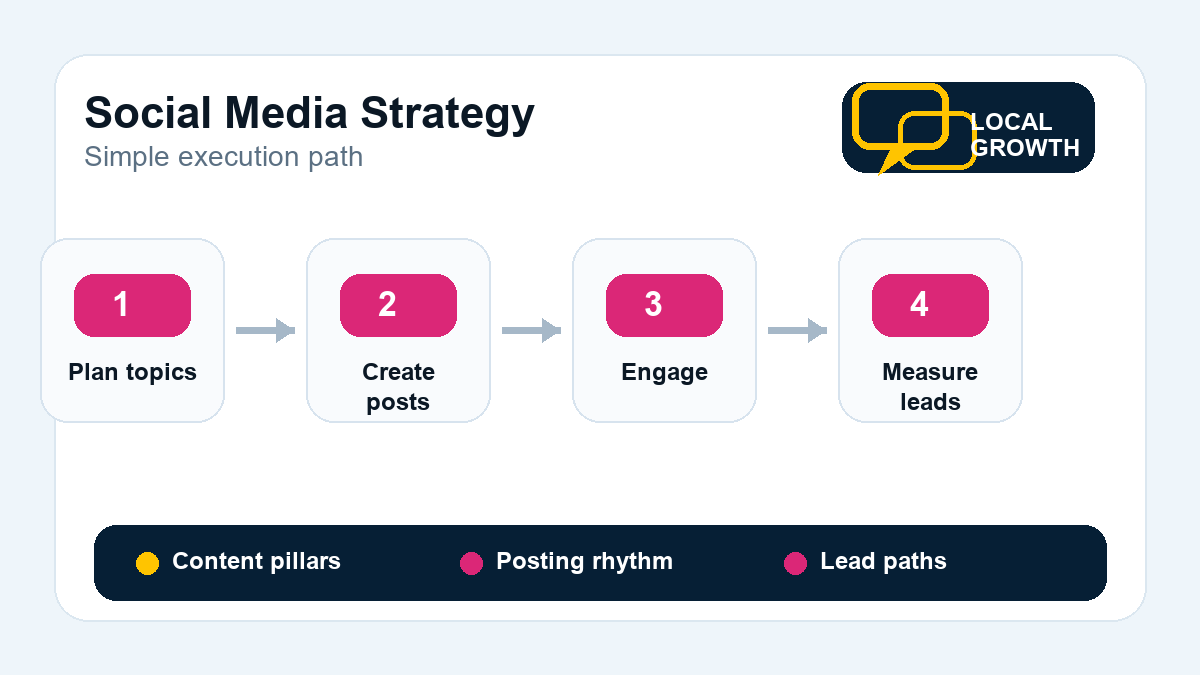
Your strategy should also include the frequency of posts, branding attributes, relevant hashtags, and visual guidelines. Once you’ve created the plan, you can start implementing it with your team. The key is to get them motivated and collaborate effectively. This way, everyone is working towards the same goal.
A social media strategy will give you direction for your brand’s accounts and help you measure their impact on your business. Companies that document their social media strategies are significantly more likely to report success. For this reason, it’s essential to develop and maintain a clear social media strategy.
A social media strategy should also include tracking trending topics. Keeping a close watch on trending topics is an effective way to reach your target market. You can do this by providing extensive coverage for those topics in your content and linking them back to your social media accounts. You can even use hashtags to target your sales outreach. For example, a travel company can leverage hashtags like #travel, #adventure, or specific location tags.
You can also track the performance of your campaigns by using social media management platforms like Hootsuite, Buffer, or Sprout Social. These tools give you an overview of all your posts in a single place. In addition, you can customize your reports based on your preferences. You can also conduct surveys to learn what your audience wants and needs. This is a great way to measure the effectiveness of your strategy and make necessary changes. Measuring results Social media is a great way to expand your audience, get more exposure, and engage with customers. However, many business owners are hesitant to invest in this type of marketing because they aren’t sure how to measure its ROI. While you can measure metrics like followers and post engagements, it can be difficult to directly attribute sales to social media.
Some social media experts recommend using more specific metrics to measure success. These metrics include follower growth rate, post engagements, brand awareness metrics, and click-through rates. This can help you adjust your strategy and refine your social media marketing. It can also help you determine what is working and what isn’t. Keeping track of the results can also help you improve future campaigns.
The first step in measuring your social media marketing efforts is to set specific, measurable goals. Your goals should be realistic, and this means determining which channels are working for you. Your social media efforts can serve many purposes, from broadcasting news and updates to answering questions from customers. In addition, they can also help you engage with your community.
When you have decided on your goals and how to measure success, you can use social media analytics to set realistic performance benchmarks. You can then compare your results with those benchmarks over time. By using social media analytics, you can track your competitors and other campaigns. This information can help you to optimize your social media marketing campaigns and increase your ROI.
Moreover, you can also track individual social media campaigns to see their results. This way, you can compare different social media campaigns to determine what content works best for your business. For instance, if one campaign format consistently attracts more viewers, it may be the best way to increase brand exposure. And if one campaign isn’t working, you can always tweak it based on past performance data.
Plan The Content Mix
Measure And Adjust
Action checklist
Need a social strategy that feels consistent?
Nexgen can turn your services and brand voice into a practical social media calendar.
How to Make the Most of Video Marketing
Video Marketing
Updated for 2026 by Bill Gilmore , Digital Marketing Lead at Nexgen Local Marketing.
Quick answer
Video marketing works when each asset has a clear job: explain, prove, answer, compare, or convert.
Clear purpose
This is one of the core pieces that makes video marketing work as a practical business strategy.
Strong hook
This is one of the core pieces that makes video marketing work as a practical business strategy.
Choose The Right Video Type
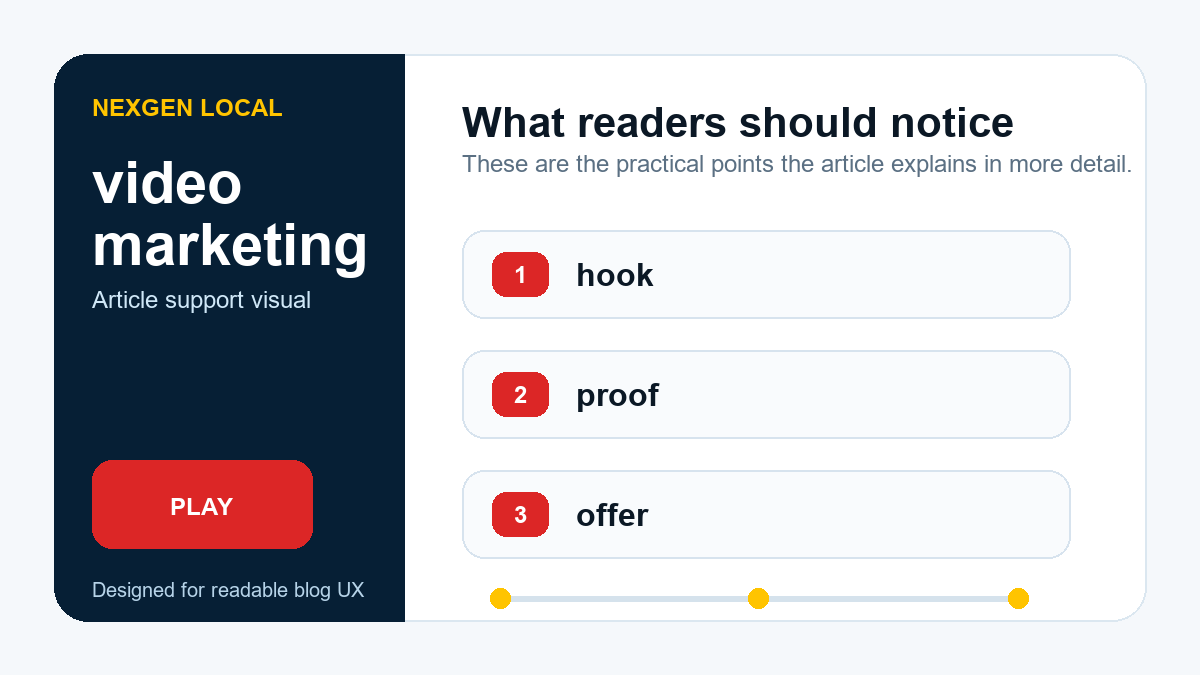
In order to make the most of video marketing in 2026, you must plan your approach and determine which type of video to create. Different types of videos have their own pros and cons. You must also decide whether your videos should be educational, informative, or both. Here are some tips to help you choose the best type of video for your needs. High information retention rate To maximize the effectiveness of your video marketing campaigns, you need to make sure that your viewers retain information. Luckily, there are several ways to measure this. To begin, look at industry benchmarks. The data will tell you what your audience is consuming and for how long. For example, with the rise of short-form content on platforms like YouTube Shorts and TikTok, a viewer might engage deeply for 60 seconds, while longer educational content can hold attention for many minutes.
Video content can stimulate your customers’ visual and audio senses, which will help them retain information. This is a great way to build customer loyalty. It’s also an excellent way to educate and empower customers. Using videos that tell a story will often resonate with customers on an emotional level. Videos that spark an emotional response from customers are also more likely to be shared.
Using video to communicate with your customers is a great way to increase conversions. It can also help your SEO, and can send a stronger brand message. It’s worth checking out your competitors’ email lists to see which ones are using video. If you see that they’re using it, you might want to do the same.
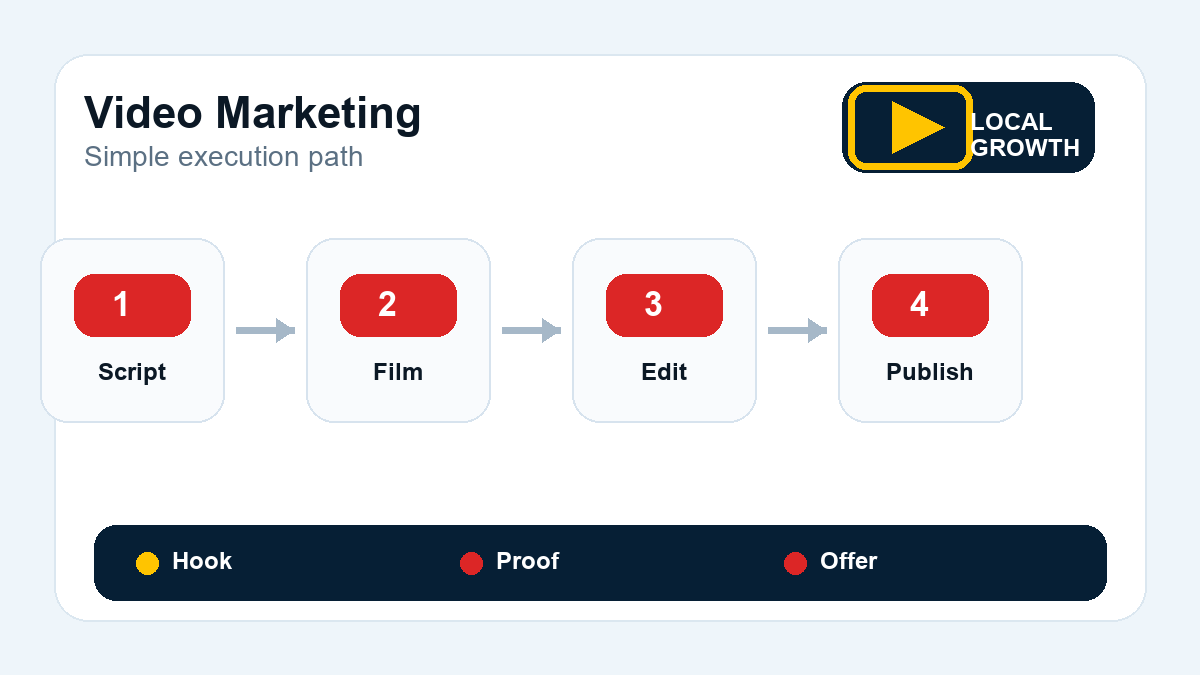
Another way to improve the effectiveness of your video content is to add a call-to-action at the end. You can use a short, simple logo to mark the end of the video. This will allow your calls-to-action or email collector to appear right after the video. For longer videos, consider creating shorter 30- to 60-second cuts for social media. This will result in higher engagement and more bang for your buck.
Video remains the most popular type of content consumed online today. A vast majority of internet users prefer video content over non-video content, with the average person watching many hours of online video per week. As of 2026, online video consumption continues to grow, with the average person watching well over 100 minutes per day.
Research shows that video content can boost customer engagement and sales. Moreover, nearly all marketers plan to continue using video content in their advertising campaigns. Studies have shown that videos are the most popular type of content on social media sites. In fact, YouTube alone has grown to over 2.7 billion users, not including the massive audiences on TikTok and Instagram Reels. Multi-sensory experience A multi-sensory experience is a powerful sales tool that strengthens consumer-brand connections and improves customer retention. Research shows that consumers remember a store with a memorable sensory experience more often than one that fails to engage their senses. In addition to improving retention, multi-sensory marketing campaigns strengthen emotional connections between brands and consumers.
This is an approach to marketing that targets the customer’s five senses, creating a unique experience that engages their minds. Unlike traditional marketing methods that target the visual sense, sensory marketing uses all five senses to create a lasting impression that reflects the brand’s personality. When used correctly, it can significantly increase brand recall.
Another great example of how brands can engage with consumers is through touch marketing. In stores, shoppers can feel the texture of products and try them out before purchasing them. For example, Starbucks allows customers to smell their coffee, and Costco offers samples to try out their products. A Retail Dive survey showed that more than half of consumers go to brick-and-mortar stores to touch and feel products. By replicating this experience on the web through descriptive video, brands can improve their customer’s confidence in their purchases.
Multi-sensory experience marketing can lead to more engaging conversations and a greater chance for conversion. It has proven to be an effective method for brand retention, and it can help you stand out in the crowd. By using all five senses, consumers are more likely to be captivated and become loyal to your brand.
Brands that are memorable are often built by tapping into their audience’s emotions. This is why the Coca-Cola brand can make consumers feel a sense of taste or smell. It is a proven strategy that can increase sales. It is important to understand the brand before choosing the senses to engage.
The best video marketing strategy takes advantage of the power of motion. By engaging the viewer through motion and sound, video allows the brand to tell a story that appeals to multiple senses. Combined with other marketing materials, video creates an emotional experience that can be memorable. Human connection In video marketing, it is important to create an emotional connection between your audience and your brand. People are more likely to purchase a product if they can relate to the brand’s human side. In video marketing, you can introduce yourself, show your work, and provide testimonials. This will strengthen your brand’s authority.
The strongest way to create a connection with an audience is to include a human face in your video. A human face, eye contact, and stories will engage the viewer and help them connect on an emotional level. If you’re having trouble creating a video, you can find a company that specializes in this type of video marketing.
Whether you’re creating a video to promote your brand or to help a customer with a problem, you’ll want to connect with your audience on a human level. It will go a long way in securing repeat business. A human-to-human connection will make your video stand out from the crowd, and will make your audience feel like you know them personally.
The human face will encourage an emotional response, especially if the video includes the brand’s CEO or team members. Faces have a special place in the human brain, with neural circuits dedicated to responding to them. This is why video messages from a key company figure are often more memorable than a generic text-based message.
People connect to brands on an emotional level and are more likely to buy from companies that show an emotional connection. Emotional marketing can not only increase sales, but also help a business grow and reach new people. By creating an emotional connection with your customers, you will be on your way to success in video marketing. SEO impact Adding video to your website can have a direct impact on your SEO rankings. Search engines like Google give higher priority to websites with high-quality, engaging video content. Video encourages visitors to stay on a page for longer, which reduces bounce rates. This “dwell time” signals to search engine algorithms that your page provides value.
Video content also benefits local search. It is shared across platforms like YouTube and Facebook, which can increase its visibility and traffic. The popularity of video content is only expected to increase. People like watching videos and are likely to remember them if they see them. In addition, video production has become more affordable for small businesses, making it an increasingly important aspect of SEO.
Video content should contain keywords relevant to your business. Including keywords in your video’s title, description, and even the video file name is an effective SEO strategy. People watch videos on smaller screens, so it’s important to optimize for these screens. Using structured data (metadata) for your videos is another way to improve their search engine rankings and visibility.
A video’s SEO impact can be significant. Videos signal to search engines that you have quality content that adheres to frameworks like Google’s E-E-A-T (Experience, Expertise, Authoritativeness, and Trustworthiness). These signals also result in higher click rates, which can improve your ranking in search results. Videos are more likely to be watched by potential customers than articles. A strong SEO strategy can lead to a surge in your traffic. In addition, video content boosts backlinks, which are a critical element of positioning on the web.
Creating videos that appeal to consumers is a key to success. Make sure to measure their performance so you can optimize your videos for the best results. Once you have done this, you’ll be able to determine which videos are performing the best and which ones need more work. Using web analytics to track the performance of your videos can give you a good idea of how well they affect your site.
When implementing video marketing, keep in mind the length of your video and its content. With the dominance of short-form video, creating content under 90 seconds is key for platforms like TikTok, Instagram Reels, and YouTube Shorts. These short, engaging videos can capture attention quickly, boost on-page engagement, and indirectly increase your organic ranking.
Make Production Sustainable
Turn Videos Into Leads
Action checklist
Want more useful video assets?
Nexgen can help build a video plan tied to search, social, and lead generation.