

Social Media Marketing
How to Create a Cohesive Social Media Marketing Strategy
Social Media Marketing
Updated for 2026 by Bill Gilmore , Digital Marketing Lead at Nexgen Local Marketing.
Quick answer
A cohesive social strategy keeps voice, visuals, offers, posting cadence, and measurement aligned across every channel.
One voice
This is one of the core pieces that makes social media strategy work as a practical business strategy.
Clear content lanes
This is one of the core pieces that makes social media strategy work as a practical business strategy.
Define The Brand System
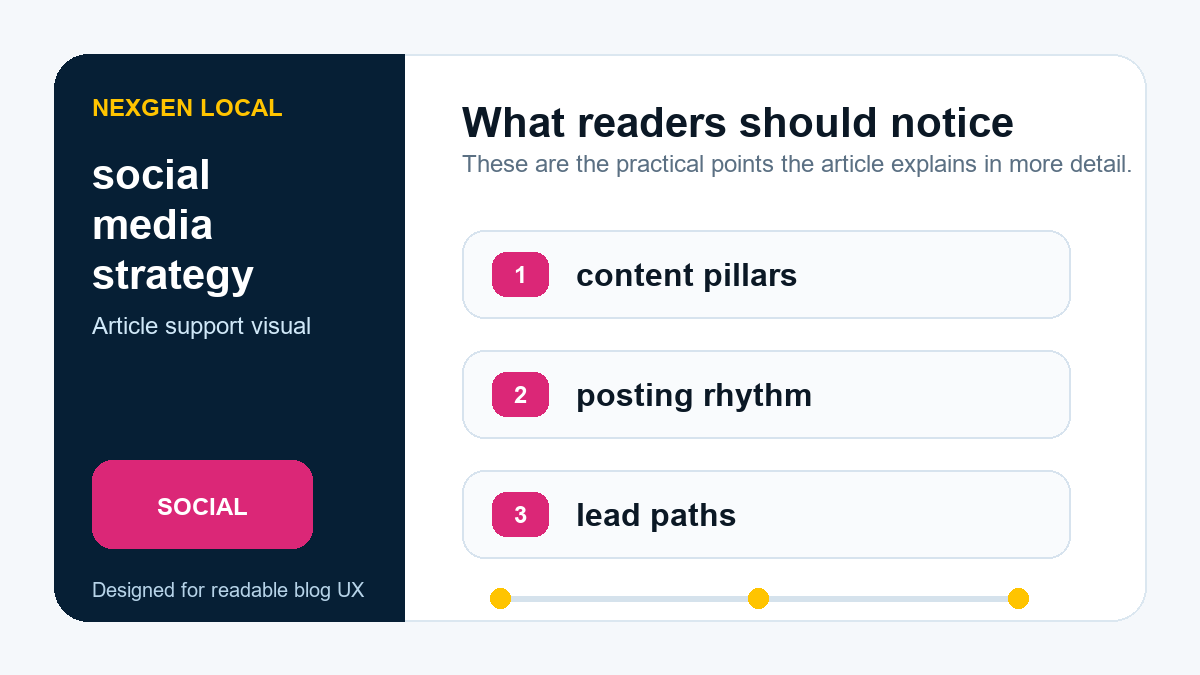
When it comes to social media marketing, a cohesive strategy is key in 2026. It helps consumers recognize your brand by ensuring your voice, style, and tone are consistent across all platforms. To make your social media strategy more effective, continually ask for consumer input. They can provide valuable inspiration and help you stay on-brand as platforms and trends evolve. Creating audience personas The first step in creating a successful persona is to identify your target audience. You can do this by creating a profile of the ideal customer for a particular product or service. Another option is to research your existing audience. This will help you figure out age groups and other demographics that will help you define your target audience.
Knowing who your audience is will help you craft posts in the right way. It will help you establish your social media voice and improve your content strategy. Knowing your audience will allow you to target your advertising to specific segments of your target audience. It will also help you identify the problems they are experiencing and the solutions that you can offer them.
A buyer persona is an ideal customer profile that can help you better target paid and organic social media marketing. The more data sources you use, the more complete your persona will be. It is also helpful to use tools like your customer relationship management (CRM) platform to record your target audience’s needs, challenges, and objections.
Once you have identified your target audience, you can build a persona for them based on their age, interests, demographics, and other traits. A persona will guide your social media voice and help you create useful content that your target audience will find valuable. There are many tools and strategies available to help you create audience personas for social media marketing.
Social media personas are extremely important for your business. Knowing your audience helps you draft content, develop strategies, and convert them into customers. In addition to being effective, a social media persona will help you maintain consistency among your interactions. Identifying the right social media keywords Identifying the right social media keywords for your marketing campaigns is essential to ensure that your audience will see your messages. Using keywords that are appropriate for your audience’s preferences and needs will improve engagement and reach. Before you start creating your campaign, conduct research to identify the right keywords for your niche.
One of the best ways to find social media keywords is to run a basic search across all the major networks. Using a native search on each platform will give you a good idea of which keywords are popular, underexploited, and overused. Keep in mind that users use search functions differently and are likely to look for different things on different platforms like TikTok versus LinkedIn.
Researching keywords for social media is a great way to get an edge on your competitors. Your competitors have likely already researched the keywords they use and analyzed them on a site-by-site basis. However, the way users search for terms on social media sites varies wildly, so your approach to keyword research must change accordingly. Luckily, there are a number of resources and platform-specific tools available to help you learn how to research the right social media keywords for marketing.
Once you have identified the keywords for your social media campaigns, the next step is to optimize your content around those keywords for different platforms. This is not a one-time task and should be an ongoing part of your strategy. Identifying the right social media keywords for your marketing campaigns will help you increase engagement and get the results you need.
Visual platforms like Pinterest and Instagram are excellent tools for identifying social media keywords. Their search features allow you to type in a keyword and get multiple visual and text-based suggestions. The results will include popular phrases and trending topics related to your products. You can also use social listening tools to see which terms are trending across the social landscape. Creating shareable content To create shareable content for your social media marketing strategy, you must create something that your target audience will enjoy. This is especially true for short-form video on platforms like Instagram Reels and YouTube Shorts. Moreover, the content must also contain a clear call to action (CTA) and be valuable to your audience. Examples of shareable content include short videos, user-generated content campaigns, surveys, and quizzes.
The content must be easy to consume and skim. Listicles and “how-to” guides work well because people tend to scan for key information. Make your content as informative and educational as possible, but also make it fun and interesting. This can boost your viral factor. However, ensure your posts are concise and get to the point quickly.
Shareable content is a valuable marketing strategy. It can generate buzz about a new product or service and increase brand awareness. One way to do this is by having a popular influencer or user share a post about a new item. This can be your followers’ first introduction to the brand. The right content can make them want to learn more and share it with their networks.
People are attracted to content that evokes emotion. Emotional content, such as personal stories or behind-the-scenes looks at your business, can inspire people to take action. In addition, it can significantly increase interaction. Think about what articles and videos have captivated you and inspired you to share them. You can also seek the advice of a marketing expert who can help you incorporate shareable content techniques into your social media strategy.
The choice of words is another important factor in creating shareable content. If your content is too complicated to read or understand, chances are your audience won’t share it. Instead, make sure the words you use are easy to understand and use clear, quality language. Creating a social media strategy When creating a social media strategy for marketing, you should have clear goals in mind. These goals should complement your overall business objectives. You should also know your target audience so that you can tailor your social media strategy to them. You can use the personas you created to help you target the right audience with the right message.
Your strategy should also include the frequency of posts, branding attributes, relevant hashtags, and visual guidelines. Once you’ve created the plan, you can start implementing it with your team. The key is to get them motivated and collaborate effectively. This way, everyone is working towards the same goal.
A social media strategy will give you direction for your brand’s accounts and help you measure their impact on your business. Companies that document their social media strategies are significantly more likely to report success. For this reason, it’s essential to develop and maintain a clear social media strategy.
A social media strategy should also include tracking trending topics. Keeping a close watch on trending topics is an effective way to reach your target market. You can do this by providing extensive coverage for those topics in your content and linking them back to your social media accounts. You can even use hashtags to target your sales outreach. For example, a travel company can leverage hashtags like #travel, #adventure, or specific location tags.
You can also track the performance of your campaigns by using social media management platforms like Hootsuite, Buffer, or Sprout Social. These tools give you an overview of all your posts in a single place. In addition, you can customize your reports based on your preferences. You can also conduct surveys to learn what your audience wants and needs. This is a great way to measure the effectiveness of your strategy and make necessary changes. Measuring results Social media is a great way to expand your audience, get more exposure, and engage with customers. However, many business owners are hesitant to invest in this type of marketing because they aren’t sure how to measure its ROI. While you can measure metrics like followers and post engagements, it can be difficult to directly attribute sales to social media.
Some social media experts recommend using more specific metrics to measure success. These metrics include follower growth rate, post engagements, brand awareness metrics, and click-through rates. This can help you adjust your strategy and refine your social media marketing. It can also help you determine what is working and what isn’t. Keeping track of the results can also help you improve future campaigns.
The first step in measuring your social media marketing efforts is to set specific, measurable goals. Your goals should be realistic, and this means determining which channels are working for you. Your social media efforts can serve many purposes, from broadcasting news and updates to answering questions from customers. In addition, they can also help you engage with your community.
When you have decided on your goals and how to measure success, you can use social media analytics to set realistic performance benchmarks. You can then compare your results with those benchmarks over time. By using social media analytics, you can track your competitors and other campaigns. This information can help you to optimize your social media marketing campaigns and increase your ROI.
Moreover, you can also track individual social media campaigns to see their results. This way, you can compare different social media campaigns to determine what content works best for your business. For instance, if one campaign format consistently attracts more viewers, it may be the best way to increase brand exposure. And if one campaign isn’t working, you can always tweak it based on past performance data.
Plan The Content Mix
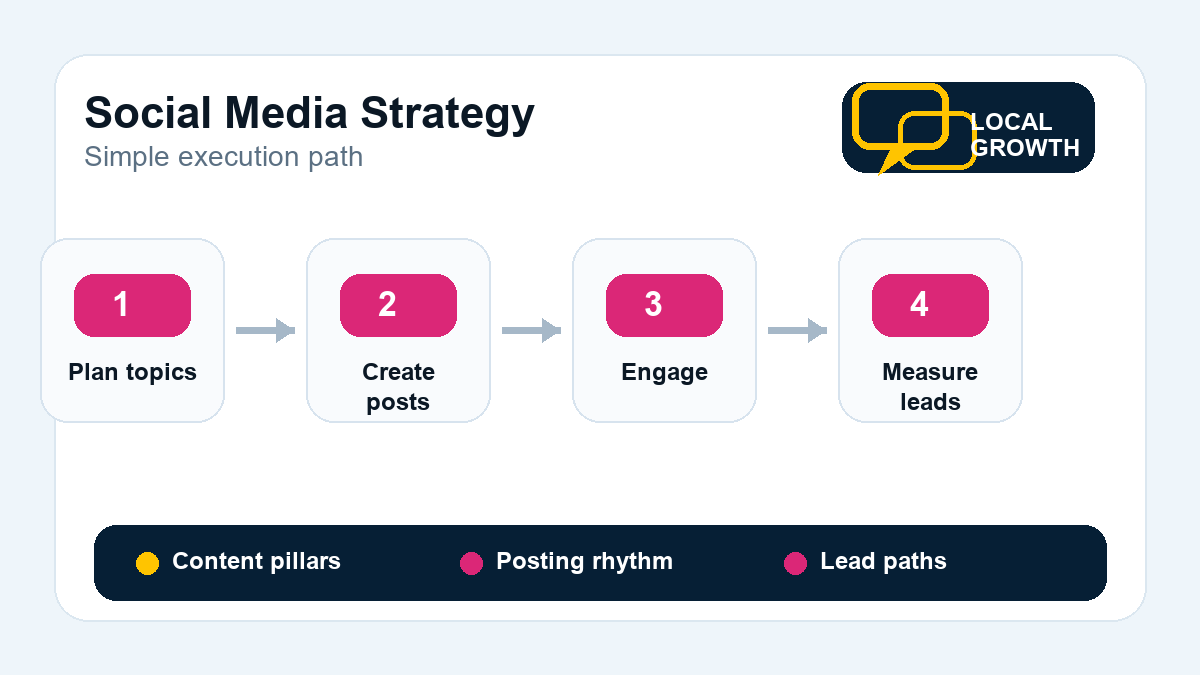
Measure And Adjust
Action checklist
Need a social strategy that feels consistent?
Nexgen can turn your services and brand voice into a practical social media calendar.