

Performance Based Marketing
AI Automation for Roofing Companies: Lead Capture, Auto-Quoting, and Same-Day Follow-Up
AI Automation
You're juggling storm-driven demand spikes, managing crews, and trying to get quotes out before a lead goes cold. What if you could capture, qualify, and follow up with every single lead within five minutes, even at 11 PM on a Saturday, without lifting a finger? This post explains exactly how AI automation for roofing companies makes that possible, transforming your lead flow from a firehose you can't manage into a predictable, profitable pipeline.
Quick answer
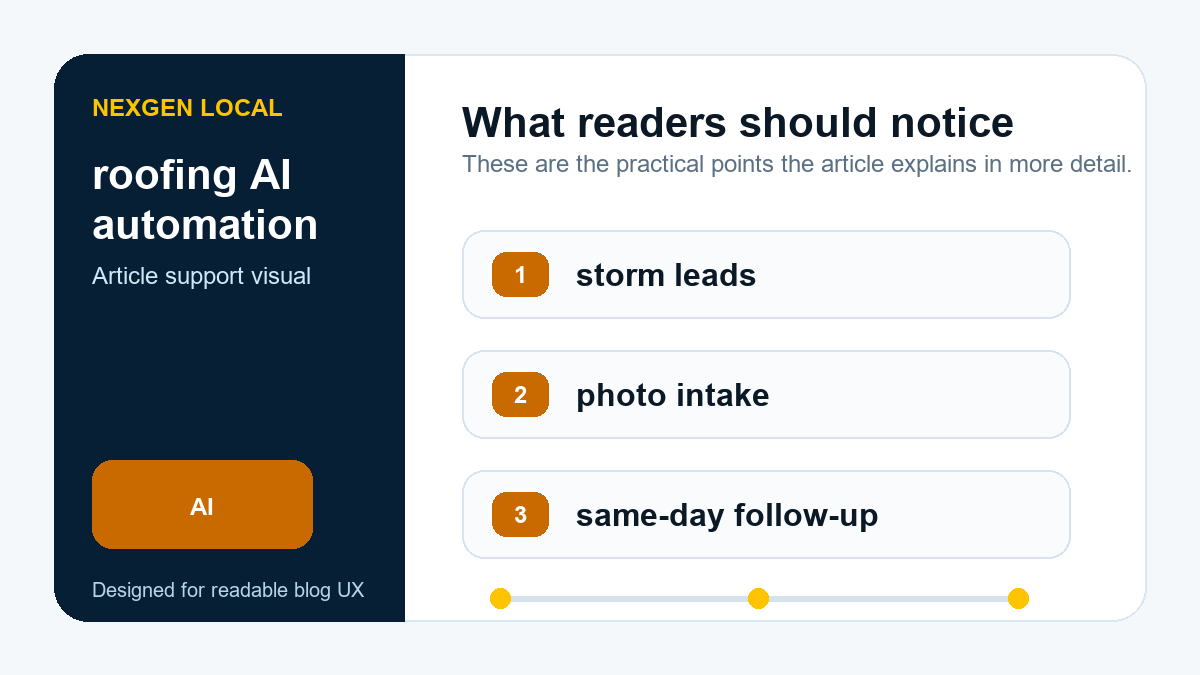
Roofing AI automation is strongest when it speeds up response time, qualifies storm leads, routes estimates, and follows up before competitors call back.
Instant lead capture
This is one of the core pieces that makes roofing AI automation work as a practical business strategy.
Same-day follow-up
This is one of the core pieces that makes roofing AI automation work as a practical business strategy.
Why Roofing is a High-Leverage Vertical for AI Automation in 2026
The roofing industry is uniquely positioned to benefit from AI automation for three core reasons. First, the average ticket size is substantial. Losing even one qualified lead due to slow follow-up is a significant revenue loss. Second, lead value is highly perishable. A homeowner with a damaged roof is actively searching and will book the first responsive, professional company that answers. Research shows that contacting a lead within 5 minutes makes you 21 times more likely to qualify them. Finally, your business is subject to unpredictable, weather-driven demand. When a hailstorm hits, your phone rings off the hook. Automation ensures you don’t miss a single opportunity when it matters most.
Lead Capture: AI Form-Fillers and Chat Agents
The qualification process starts the moment a potential customer lands on your website. Instead of a simple “contact us” form, an AI-powered system does the initial vetting. Imagine a chat agent on your site that doesn’t just say “How can I help?” but asks targeted questions:
- “What type of roof do you currently have (shingle, metal, tile, flat)?”
- “What is the approximate age of your roof?”
- “Are you inquiring about a repair, a full replacement, or a new installation?”
- “Have you noticed any specific damage, such as missing shingles or water leaks?”
This isn’t just a fancy form. This is an intelligent system gathering critical data upfront. It qualifies the lead’s intent and specific needs before your team ever spends a minute on the phone. The result is a richer lead profile, allowing your sales team to have a much more productive and informed first conversation. This is a core component of effective roofer marketing in a competitive digital landscape.
Same-Day (Sub-5-Minute) Follow-Up
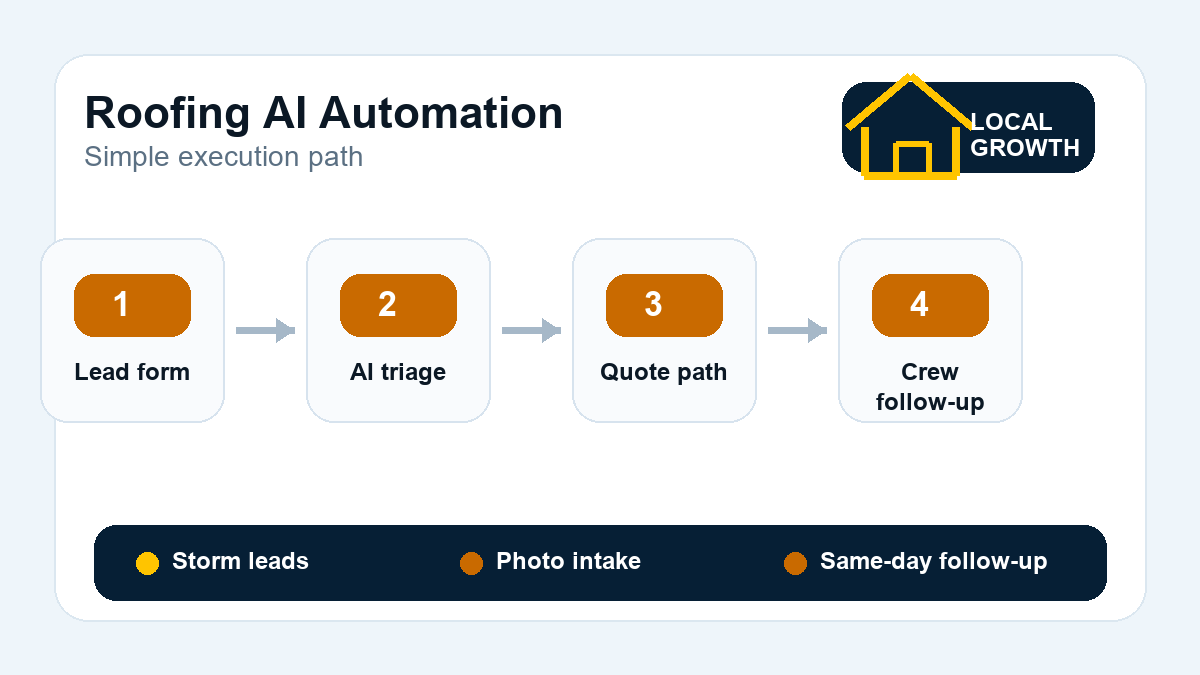
This is where the magic happens. A lead submits their details through your AI-enhanced form or chat. Within seconds—not minutes or hours—an automated workflow kicks in. An AI-powered SMS and even a voice call can engage the lead immediately. The AI can confirm their submission, verify they are a real person, and, if they’re ready, book a measurement appointment directly on your calendar. It syncs with your CRM, creating a new contact record and logging the interaction automatically.
This system doesn’t sleep or take weekends off. It ensures every single inquiry from your website, paid ads, or Google Business Profile receives an immediate, professional touchpoint. This level of responsiveness is a massive competitive differentiator and a cornerstone of modern lead generation.
Auto-Quoting: The Future of Roofing Estimates
While a hot lead is on the line, the next evolution is providing an instant, data-driven ballpark quote. By integrating with aerial measurement software (like Roofr or EagleView) and pre-configured material costs, an AI system can generate an estimated price range. This isn’t a final, binding quote, but it’s a powerful tool to anchor the customer’s budget expectations and maintain momentum.
There are pros and cons to this approach. Some roofers prefer to keep pricing discussions in the hands of a human sales rep to build value and explain variables. Others find that providing an instant, transparent estimate dramatically increases conversion rates. We can configure these systems either way: deliver the auto-quote directly to the homeowner via email or send it to your sales team as an internal tool to accelerate their manual quoting process.
Pipeline-Fill Systems: Nurturing Leads That Aren’t Ready
What about leads who inquire but don’t book an appointment right away? Don’t let them fall through the cracks. AI automation excels at long-term nurturing. We build automated “drip” sequences that keep your brand top-of-mind without manual effort.
- Educational Drips: Send a series of automated emails or texts explaining the benefits of different roofing materials, the signs of a failing roof, or how to navigate the insurance process.
- Storm-Damage Alerts: When a significant weather event is forecast for their zip code, the system can send a proactive message: “A storm is coming. Here’s what to look for on your roof afterward. Let us know if you need a free inspection.”
- Financing Reminders: For leads who expressed cost concerns, a timely follow-up about financing options can reactivate their interest.
This pipeline-filling machine turns “maybes” into future jobs, maximizing the value of every dollar you spend on marketing.
Review and Reputation Automation
After a job is completed and the final invoice is paid, the automation triggers one more time. An SMS or email is sent to the homeowner asking about their experience. This is a critical junction. The system uses “smart routing”:
- Positive Feedback: If the customer indicates they had a great experience (e.g., clicks a “happy face” or gives a 9/10 score), they are automatically directed to your Google Business Profile to leave a public review.
- Negative Feedback: If the experience was anything less than stellar, they are routed to a private internal form. This allows your management team to address the issue directly and resolve it before a negative review is ever posted online.
This single workflow protects your hard-earned reputation and systematically builds a 5-star profile online.
Insurance-Claim Coordination
Dealing with insurance paperwork is a major bottleneck. AI can significantly streamline this process. Modern AI automation tools can parse documents, extracting key information from claim packages like adjuster notes, claim numbers, and coverage limits. The system can then provide automated status updates to the homeowner via text or email as their claim progresses through different stages, reducing the inbound “what’s happening with my claim?” calls your office has to field.
Real Proof: Our Verified Roofing Case Studies
These aren’t theoretical concepts. These are the exact systems we’ve implemented to support our clients’ incredible growth. The playbook we’ve outlined here is the engine that captures the high-quality traffic generated by our SEO work. You can see the results for yourself in our case-studies section, where we feature multiple #1-ranking roofing clients. We’ve achieved top-3 organic rankings for highly competitive terms for clients like Coconut Grove Metal Roof, Homestead Metal Roof, Key Largo Metal Roof, Key West Metal Roof, Pinecrest Metal Roof, Metal Roof Masters, Miami Metal Roof Company, and South Miami Roofer. Their success isn’t just about ranking; it’s about converting that visibility into profitable business, and automation is the key.
What NOT to Automate in Your Roofing Business
AI is a tool, not a replacement for human expertise and connection. It’s critical to keep the human touch where it matters most. We never recommend automating:
- The Actual Roof Inspection: An experienced roofer’s eye is irreplaceable.
- Key Customer-Relationship Moments: Building trust during the final presentation or handling a complex customer concern requires empathy.
- Complex Damage Assessment: Nuanced assessments of structural issues or layered damage require on-site professional judgment.
- Finalizing the Contract: Walking a client through the contract and answering their final questions should always be a personal interaction.
The goal of automation is to handle the repetitive, time-sensitive tasks, freeing you and your team to focus on the high-value work that only a human can do.
Frequently Asked Questions
What does it cost to implement AI automation?
The cost can range from a few hundred dollars a month for basic lead-follow-up systems to a more significant investment for a fully integrated platform with auto-quoting and CRM integration. It depends entirely on your current systems and the scope of automation you need. We can design a phased approach that fits most budgets.
Do I need to replace my current CRM?
Not usually. Modern automation platforms are designed to integrate with most popular CRMs (like JobNimbus, AccuLynx, or Salesforce). The AI acts as a layer on top of your existing system, feeding it better data, faster.
What if I am just a one-truck operation?
Automation is arguably even more powerful for smaller operations. It acts as your 24/7 virtual assistant, ensuring you never miss a lead while you’re on a roof or managing a job site. It allows a small team to compete with the responsiveness of a much larger company. If you’re ready to grow, this is how you build the foundation.
Can AI handle insurance-claim disputes?
No. AI is excellent for parsing documents and providing status updates, but it cannot and should not handle the negotiation or nuanced communication required in a dispute with an insurance adjuster. That requires the expertise of your claims specialist.
Will this make my work feel less personal?
Quite the opposite. By automating the tedious, repetitive front-end and back-end tasks, it frees you up to spend more quality time with customers during the moments that matter: the inspection, the project consultation, and the final walkthrough. It makes your human interactions *more* valuable, not less.
Ready to see how AI can transform your lead flow and reclaim hours of your week? Our team builds custom automation playbooks specifically for roofing contractors. We integrate the tools, write the scripts, and build the workflows that turn missed calls into booked jobs. Call us at 407-307-1995 or contact us online to schedule a no-obligation strategy session and see what AI automation for roofing companies can do for your business.
Action checklist
Want faster roofing lead response?
Nexgen can help design an AI-assisted lead capture and follow-up system for roofing teams.
Setting Goals and Analyzing Your Metrics
Social Media Marketing
Updated for 2026 by Vanessa Bailey , Senior SEO Strategist at Nexgen Local Marketing.
Quick answer
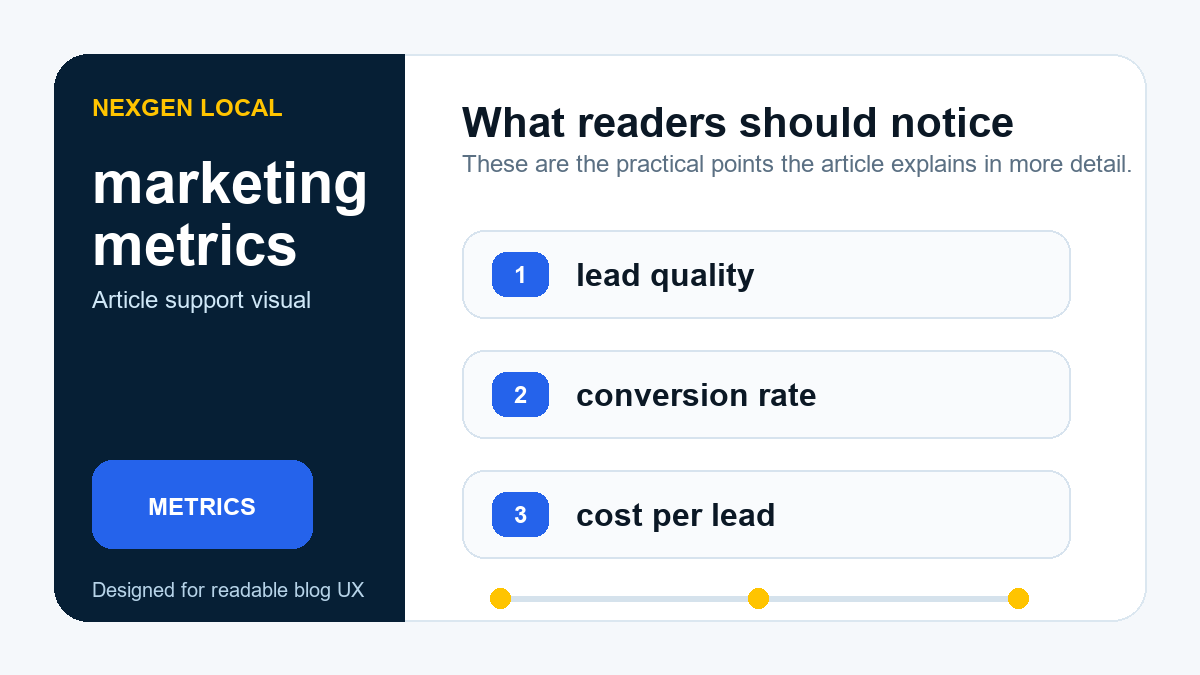
Marketing goals should connect activity to business outcomes, not just likes, views, or vague awareness metrics.
SMART goals
This is one of the core pieces that makes goals and metrics work as a practical business strategy.
Channel KPIs
This is one of the core pieces that makes goals and metrics work as a practical business strategy.
Set Goals That Matter
A specific, measurable, achievable, relevant, and time-based (SMART) goal is essential when it comes to social media marketing in 2026. Once you have determined your goal, you can then focus your efforts accordingly. This article will show you how to build an effective social media team and how to analyze your metrics for success. Analyzing social media metrics Analyzing social media metrics is a critical part of any successful marketing campaign. It helps you understand your audience, determine what content resonates, and identify which changes drive results. This analysis should be performed on a regular basis, ideally every month, to stay agile.
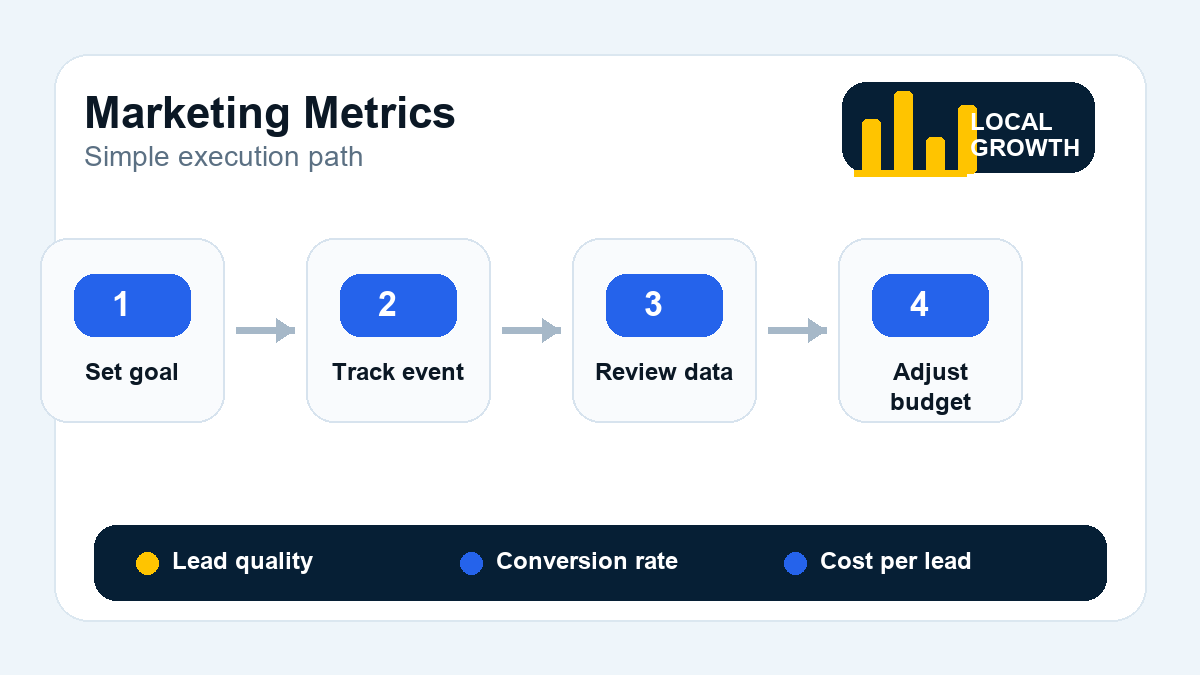
The first step is defining your primary goal. For most businesses, this will be increasing conversions from website visitors. Once you’ve defined your goal, you can analyze the key performance indicators (KPIs) that show progress. For example, you may want to track return on investment (ROI), conversion rates, or lead quality from social channels.
The next step is to identify which platforms (like Instagram, LinkedIn, or even X) are most effective for your audience. This data informs your social media strategy. Benchmarking is another vital step. This is closely related to competitor analysis, as it provides a point of comparison and helps you see how your campaign is performing against others in your industry. Creating a social media strategy When you create a social media marketing strategy, set specific goals and a clear process for measuring progress. Your metrics can be broken down into key areas: awareness (reach, impressions), engagement (likes, comments, shares), and conversion (clicks, leads, sales). The engagement level shows how well your audience is connecting with your content, whether it’s a blog post, an infographic, or a short-form video on Instagram Reels or YouTube Shorts.
These goals can be measured in various ways, including tracking click-through rates (CTR) and cost-per-click (CPC) on paid campaigns.
Using UTM parameters is crucial for tracking social visitors as they navigate your website. These tracking codes help you attribute conversions directly to your social media efforts, proving what’s working and what isn’t. This data is invaluable for refining your strategy over time. You can also use analytics reports to track and improve customer service. This data should complement your other business goals and analytics from tools like Google Analytics.
A comprehensive social media strategy is an essential step that helps you plan the content that best promotes your brand and connects with your audience. Your plan should include your goals, target KPIs, content calendar, and a high-level overview of your approach. Creating shareable content When creating shareable content, make sure it provides inherent value. It can’t be the same listicle your competitors published. Instead, it needs to inspire, entertain, or educate your audience. Often, the best way to create shareable content is to teach your audience something useful they can apply themselves.
Before you start creating, research your target audience. Use platform-native tools to see what topics are trending and what your audience finds interesting—this is especially true on platforms with powerful algorithms like TikTok. This will significantly increase the chances of your content being shared. Also, try to find different angles on popular topics. For example, you could connect your brand to relevant news or cultural moments, but only if it aligns with your brand voice.
In addition to researching your audience, it’s important to study the content published by your competitors. See what’s resonating for them. Keeping track of your competitors’ successful posts can help you spot content gaps and identify what your target buyers want to see. Establishing a structure for a social media team A well-organized team of social media professionals is crucial for a company’s success. To ensure everyone is aligned, a social media governance plan can help. This might involve key employees, stakeholders, and subject matter experts who keep the company focused on its social media goals. These people should be involved in strategic planning and decision-making.
The ideal size of a social media team varies depending on the company’s size and goals. For some small businesses, one dedicated manager is enough. For larger companies with multiple brands or many clients, creating several smaller, focused teams may be more effective.
Assigning clear roles and tasks to specific team members makes it easy to monitor work and measure results. For example, one person might focus on content creation, while another manages community engagement and customer service inquiries.
Regardless of who you hire, your social media team should follow clear guidelines to ensure a consistent brand voice and successful outcomes. It is also critical to set realistic deadlines and use project management tools to track your team’s progress effectively.
Choose Better Metrics
Review Performance Monthly
Action checklist
Need cleaner marketing reporting?
We can help connect your marketing metrics to leads, calls, and revenue.